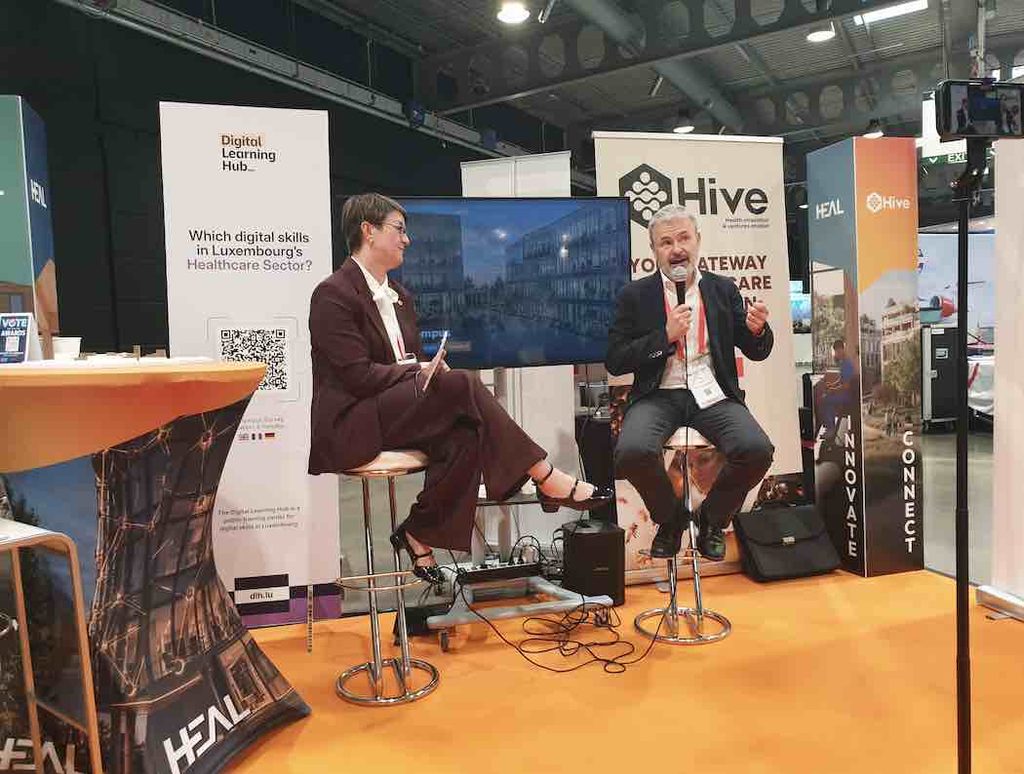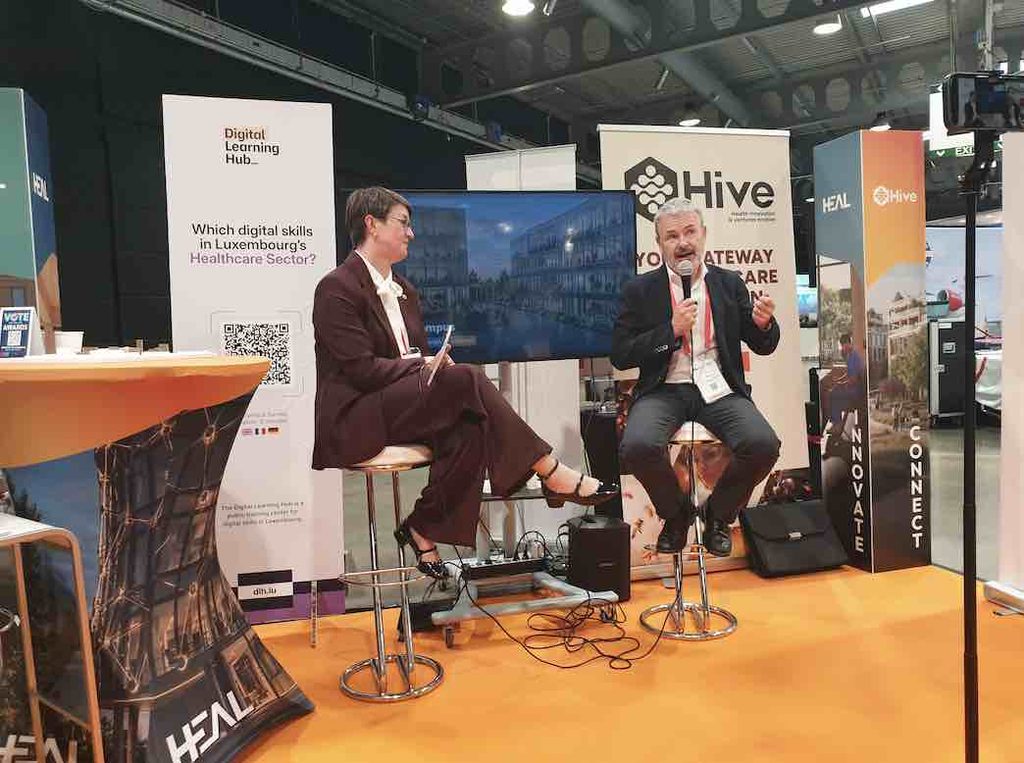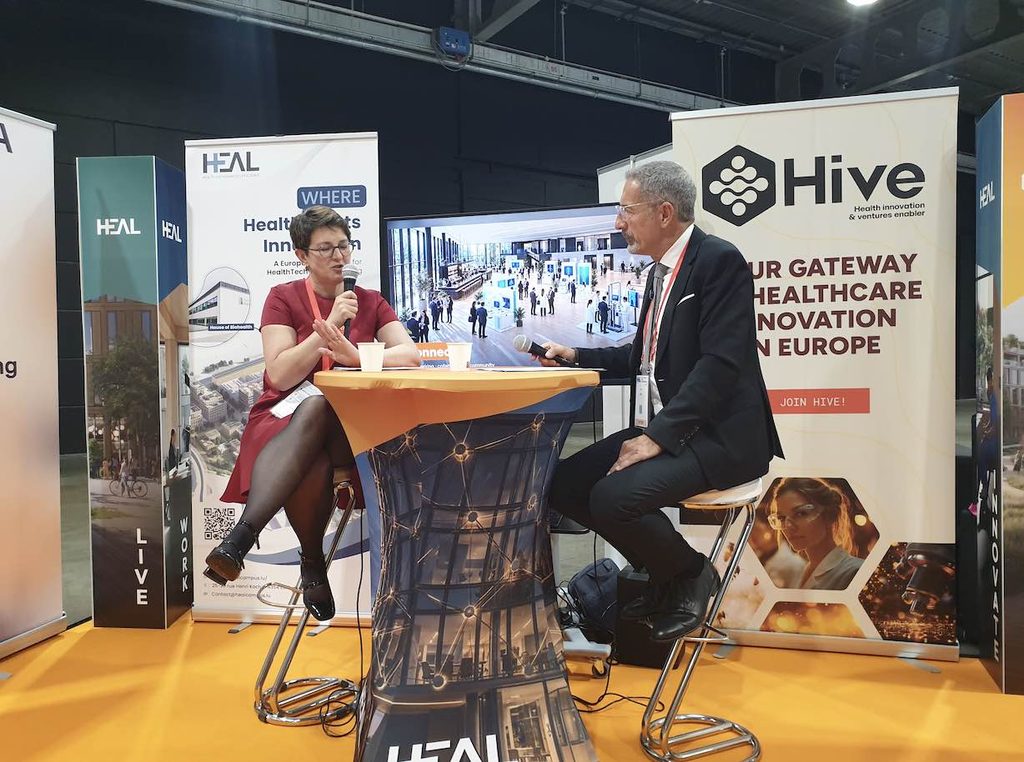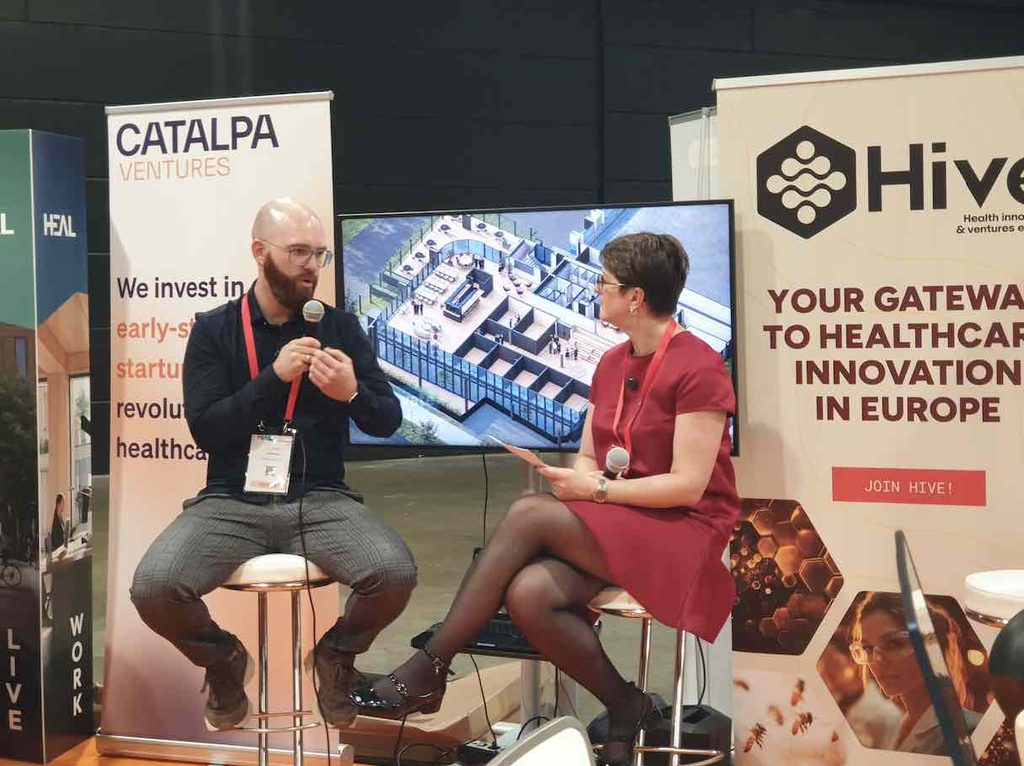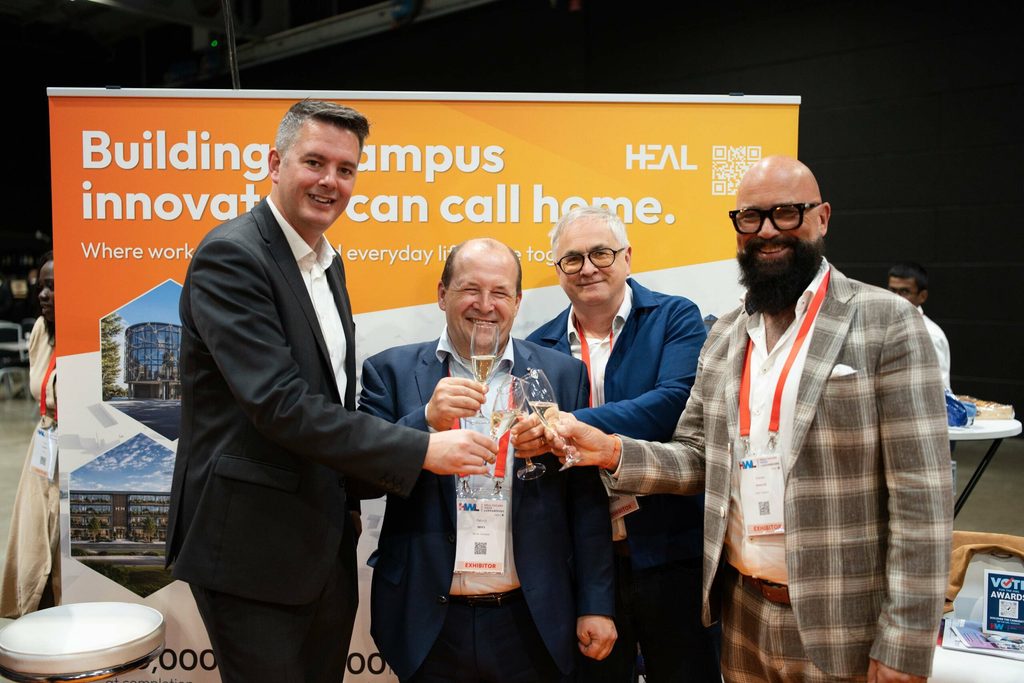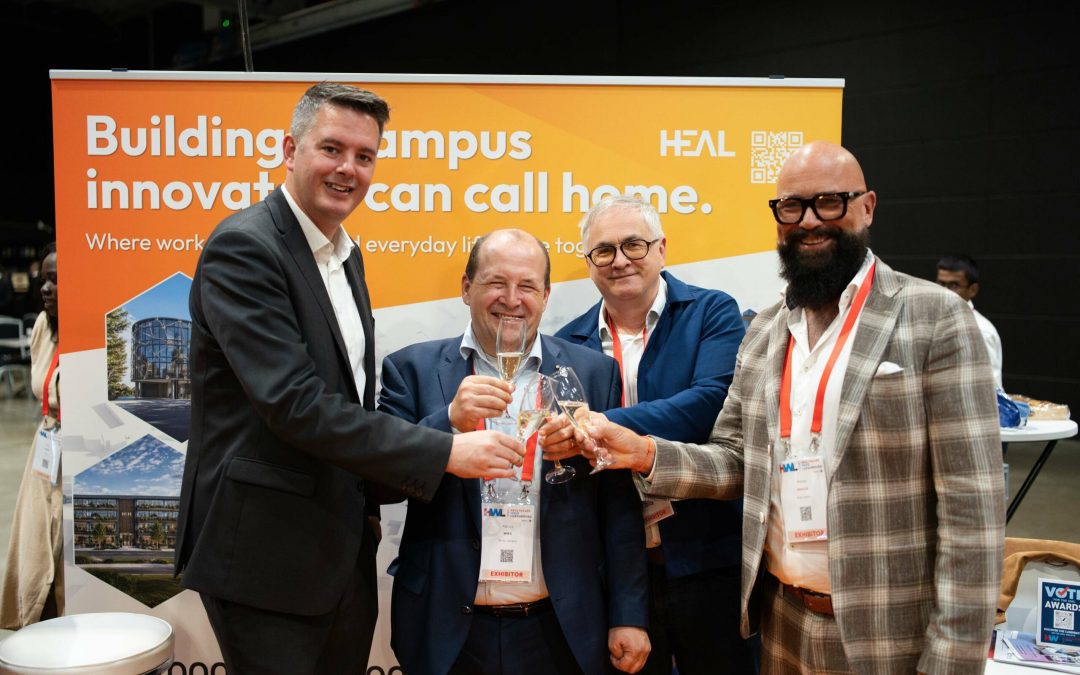
What makes an innovation useful to healthcare professionals, attractive to investors and eligible for insurance coverage? At Healthcare Week Luxembourg, HE:AL Campus and Hive brought together three healthcare leaders to explore these questions. Their discussions offer a practical perspective on the campus’s development and its two new buildings.
Developing a healthcare technology means answering several questions. What problem does it solve? How does it fit into the work of healthcare professionals? Who will fund its development and, ultimately, its use? These questions involve different stakeholders whose expectations need to be understood from the earliest stages.
These issues were central to the “Ask the Health Leaders” sessions hosted at the HE:AL Campus and Hive pavilion during Healthcare Week Luxembourg. Dr René Metz, General Director of the Centre Hospitalier Emile Mayrisch (CHEM), Christian Goergen, Partner at Catalpa Ventures, and Stefan Pelger, Managing Director of DKV Luxembourg, shared their criteria, constraints and perspectives.
Their contributions highlighted a common requirement: demonstrating an innovation’s value and preparing for its integration into the healthcare system.
In Hospitals, Start with the Needs of Professionals and Patients
For Dr René Metz, adopting a technology often begins with an initiative from a physician. A practitioner identifies an opportunity to improve care, proposes a piece of equipment or wants to develop a new approach. The hospital’s role is then to assess the proposal and establish the conditions for its implementation.
He illustrated this with the introduction of an orthopaedic surgical robot at CHEM. A surgeon championed the project, discussed it with management and made the case for its use and potential benefits for patients. Its implementation also required careful attention to data protection and cybersecurity.
The same scrutiny applies to artificial intelligence. CHEM asks prospective AI providers to complete a 60-question assessment, which is reviewed by its data protection and cybersecurity teams. Tools must also be monitored after deployment, particularly as they evolve.
For innovative companies, the message is practical: identifying the relevant healthcare professionals and working alongside them helps clarify needs, workflows and adoption requirements.
For Investors, Make the Project’s Value Clear
Christian Goergen shares this emphasis on understanding clinical practice. A former HealthTech entrepreneur, he stressed the patience and perseverance required to build a company in the sector.
Catalpa Ventures focuses on three healthcare challenges: an ageing population, workforce shortages and rising costs. Digital solutions can address these pressures in several ways, including reducing administrative workloads and improving chronic disease management.
A promising technology must also find its place within existing care pathways. The investor therefore pays particular attention to complementary founding teams that bring together medical, commercial and technical expertise.
His advice to entrepreneurs centres on clarity: explain the current pathway, show precisely where the solution adds value and describe how the business will generate revenue. Making the project easy to understand strengthens conversations with investors and prospective users alike.
For Insurers, Connect Evidence with Economics
The conversation with Stefan Pelger offered another perspective: under what conditions can an insurer cover an innovation?
The Managing Director of DKV Luxembourg outlined five essential questions. Does the solution address a real health problem? Is there credible evidence that it works? Is it safe and compliant with regulatory requirements? Is the population that would benefit clearly defined? Can its economic consequences be understood and anticipated?
A solution designed for a relatively small population can still be relevant. Stefan Pelger recommended starting with a focused pilot to assess how it works and what results it delivers.
Prevention is an important part of this discussion. However, it requires funding interventions today whose benefits may only become apparent years later. In his view, private insurers can help accelerate their development, provided there is solid evidence on which to assess their value.
Prevention and Time for Care: Two Shared Priorities
Several common priorities emerged from the three discussions. The first is the time available for patient care. Reducing administrative tasks, improving information flows and organising care pathways more effectively offer practical ways to support healthcare professionals.
The second is anticipating patients’ needs. Prevention, chronic disease management and remote monitoring create opportunities while raising questions about funding, responsibility and organisation.
The future Südspidol illustrates this evolution. Dr René Metz described a hospital designed around patient pathways, logistics and a substantial volume of outpatient care. As more patients return home after treatment, preparing for their arrival and following up after discharge become increasingly important. Digitalisation and remote monitoring can support this model.
Two New Buildings to Support HE:AL Campus’s Development
These discussions reflect HE:AL Campus’s ambition to connect companies developing healthcare solutions with the stakeholders who can contribute to their assessment, funding and use.
The presentation of two new buildings was among the highlights announced for Healthcare Week Luxembourg. Intended to accommodate laboratories, offices and collaborative spaces, they will expand the campus’s capacity to welcome Digital Health, HealthTech and MedTech projects.
Their development brings together workspace and access to expertise. The pavilion’s discussions demonstrated why this matters: entrepreneurs need opportunities to assess their projects against clinical needs, investment criteria and healthcare funding requirements.
Through “Ask the Health Leaders”, HE:AL Campus and Hive created a forum for that dialogue. For project leaders, these conversations help clarify the steps ahead and identify the partners who can help bring their solutions into use.